



In an era where customer expectations are sky-high and competition is cutthroat, businesses can no longer rely solely on quality products or aggressive marketing. Long-term success demands strong customer relationships, consistent service, personalized experiences, and smart data management. And that’s exactly where CRM (Customer Relationship Management) plays a crucial role.
In this in-depth article by Get1Traffic, we’ll walk you through the primary objectives of CRM, their importance in modern business, actionable strategies, tools, and real-life use cases. By the end, you’ll have a comprehensive understanding of how to align CRM with your growth goals in 2025 and beyond.
What is CRM (Customer Relationship Management)?
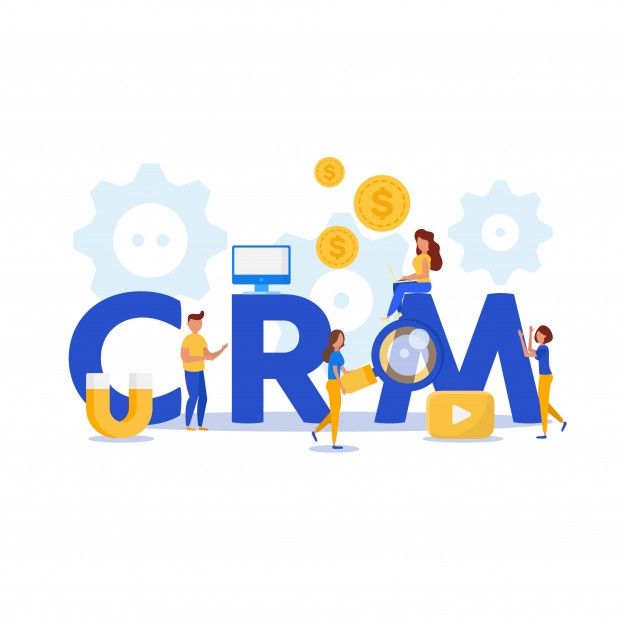
CRM refers to the technologies, processes, and strategies used by companies to manage and analyze customer interactions throughout the lifecycle—right from lead generation to after-sales support.
A CRM system helps companies to:
- Centralize customer information
- Streamline communication
- Automate workflows
- Monitor performance
- Personalize services
Whether you use free tools like HubSpot CRM or enterprise-grade platforms like Salesforce, the core purpose of CRM is relationship management—keeping your customers happy, loyal, and engaged.
Read also: What is CRM Software
Why CRM is a Must-Have in 2025
Here’s why CRM is no longer optional—it’s essential:
| Business Need | CRM Benefit |
| Omnichannel engagement | Unified customer view across email, chat, social, calls |
| Personalization | Data-driven targeting and custom offers |
| Workflow efficiency | Task automation, alerts, and reminders |
| Lead-to-customer conversion | Funnel tracking, scoring, and nurturing campaigns |
| Customer retention and loyalty | Post-sale engagement and loyalty programs |
| Data security and compliance | GDPR/CCPA-ready storage and access management |
| Real-time decision-making | Dashboards, insights, and forecasting tools |
12 Core Objectives of CRM: Explained in Detail
Let’s go deeper into the most important CRM objectives, with practical examples, tools, and tips.
🔹 1. Enhance Customer Satisfaction
Objective: Ensure timely, consistent, and personalized service.
Why it matters: Satisfied customers are more likely to return, refer others, and leave positive reviews.
How CRM helps:
- Logs customer queries and preferences
- Tracks support tickets and resolutions
- Enables proactive follow-ups
Example tools: Freshdesk + Zoho CRM integration tracks complaints and closes tickets faster.
Pro Tip: Set up automated customer satisfaction (CSAT) surveys after every interaction.
🔹 2. Improve Customer Retention
Objective: Keep existing customers engaged and coming back.
Why it matters: Acquiring a new customer costs 5–10 times more than retaining one.
How CRM helps:
- Triggers re-engagement campaigns after inactivity
- Sets reminders for check-ins or contract renewals
- Tracks churn signals (declining activity, negative feedback)
Example: An online course platform uses CRM to send reminders when users haven’t logged in for 14 days.
Pro Tip: Use lead scoring models to prioritize at-risk customers and assign dedicated retention agents.
🔹 3. Build Customer Loyalty
Objective: Turn one-time buyers into long-term brand advocates.
Why it matters: Loyal customers increase revenue and reduce marketing costs.
How CRM helps:
- Segments high-value customers
- Automates loyalty points & reward emails
- Tracks NPS (Net Promoter Score) to identify advocates
Tool Tip: Use Klaviyo or Mailchimp integrations for loyalty email automation.
Pro Tip: Offer exclusive access or early-bird offers to repeat buyers via CRM workflows.
🔹 4. Optimize Sales Funnel
Objective: Make the sales process more structured and predictable.
Why it matters: A defined pipeline improves forecasting and closes more deals.
How CRM helps:
- Visualizes deal stages (e.g., Contacted → Quoted → Negotiation → Closed)
- Sends reminders to follow up
- Allows tagging lost deals for future reactivation
Tool Example: Pipedrive CRM’s drag-and-drop sales board streamlines daily activities.
Pro Tip: Integrate CRM with a calendar tool to auto-schedule calls and demos.
🔹 5. Centralize Customer Data
Objective: Maintain a single source of truth for all customer information.
Why it matters: Quick access = faster decisions and better customer service.
CRM Features:
- Timeline view of every customer interaction
- Access control for teams
- Merge duplicate entries automatically
Tool Example: Salesforce Customer 360 offers detailed customer profiles with API integrations.
Pro Tip: Integrate web forms, WhatsApp chats, and social comments directly into CRM to avoid data loss.
🔹 6. Strengthen Team Collaboration
Objective: Improve internal communication and customer handovers.
Why it matters: Teams often work in silos. CRM ensures continuity.
How CRM helps:
- Adds internal notes
- Shows activity logs
- Tags team members for task assignments
Example: A marketing rep tags a sales agent when a lead downloads a whitepaper.
Pro Tip: Use CRMs with built-in Slack or MS Teams integration for instant collaboration.
🔹 7. Automate Daily Tasks
Objective: Eliminate time-wasting manual work.
Why it matters: Automation increases productivity and reduces human errors.
How CRM helps:
- Sends birthday emails automatically
- Moves leads to the next stage based on activity
- Sends reminders, alerts, and approvals
Example: A coaching business uses CRM to auto-send homework reminders after each session.
Pro Tip: Create “if/then” logic flows to trigger multiple actions from one customer behavior.
🔹 8. Lead Qualification and Nurturing
Objective: Focus on hot leads instead of wasting time on cold ones.
Why it matters: Better targeting = more conversions = less wasted effort.
How CRM helps:
- Scores leads based on interaction
- Categorizes leads by source/channel
- Sends relevant content to nurture cold leads
Example: A B2B SaaS brand assigns 80+ scored leads to senior closers only.
Pro Tip: Use CRM filters like “Last activity + email opened + demo scheduled” to prioritize leads daily.
🔹 9. Generate Real-Time Reports
Objective: Use live insights to make smart business decisions.
Why it matters: Data-backed choices outperform guesswork.
CRM Reports Include:
- Revenue by product/service
- Conversion rate by lead source
- Average response time
- Customer lifetime value (CLTV)
Example: A marketing manager checks open rates and click-through rates of email campaigns weekly in the CRM dashboard.
Pro Tip: Set up email digests or alerts for KPI dips (e.g., less than 20% open rate = alert).
🔹 10. Deliver Personalized Marketing
Objective: Target the right people with the right message at the right time.
Why it matters: Personalization increases engagement by 80%+.
How CRM helps:
- Segments users based on demographics, past actions, or interests
- Connects with email and ad platforms
- Tracks campaign effectiveness
Example: An online clothing store sends winter jackets to users in Delhi based on weather integration and past purchase behavior.
Pro Tip: Use dynamic fields in CRM-connected email campaigns (e.g., “Hi [First Name], we think you’ll love this new offer on [Product Category]”).
🔹 11. Scale Operations Smoothly
Objective: Grow your customer base without growing your chaos.
Why it matters: Scaling without systems leads to breakdowns.
CRM Enables:
- User-based permissions
- Branch-wise or department-wise segmentation
- Standard operating procedures (SOPs) with automation
Example: A national consultancy expands from 5 to 50 employees using CRM user roles and workflows.
Pro Tip: Choose a CRM with modular pricing and features (start small, grow big).
🔹 12. Improve End-to-End Customer Experience
Objective: Create a seamless, satisfying, and memorable customer journey.
Why it matters: CX is the new brand battleground.
CRM Helps by:
- Reducing response times
- Personalizing offers and support
- Maintaining consistency across touchpoints
Example: A travel agency sends welcome emails, personalized trip suggestions, and collects feedback after every tour—all through CRM.
Pro Tip: Create a “Customer Journey Map” inside your CRM with triggers and milestones.
What Happens When You Achieve CRM Objectives?
Here’s a snapshot of the tangible benefits:
| Objective Met | Outcome Realized |
| Better retention | Increased LTV and repeat revenue |
| Automation | 30–40% more productive teams |
| Personalization | Higher email CTR, social engagement |
| Data centralization | Zero duplication, faster onboarding |
| Real-time reporting | Agile marketing and sales strategy |
| Structured pipelines | Forecasting accuracy and scaling ability |
📌 Best Practices for CRM Success
- Involve all departments from the start—sales, support, and marketing.
- Clean and segment your data before importing.
- Define SMART CRM goals: Specific, Measurable, Achievable, Relevant, Timely.
- Regularly train your team—CRM is not a one-time setup.
- Start with core features before jumping into complex automations.
Final Words: CRM is Your Growth Engine
In 2025, businesses that master CRM will lead the market. Whether you’re a startup looking to convert leads or an enterprise managing thousands of customers, CRM helps you stay organized, responsive, and ahead of the curve.
Don’t think of CRM as software. Think of it as a strategy to understand and serve your customers better than anyone else.
“You can’t improve what you don’t measure—and you can’t measure without CRM.”
🙋♀️ Frequently Asked Questions
- What’s the biggest CRM mistake businesses make?
Not using it consistently or treating it only as a sales tool. CRM should be company-wide. - Which CRM is best for small businesses?
Try HubSpot, Zoho, or Freshsales—they’re cost-effective and easy to scale. - Can CRM work without a marketing tool?
Yes, but integrating it with email marketing, chat, and social tools provides much more value. - What’s the ROI of using CRM?
On average, businesses see a $8.71 return for every $1 spent on CRM.
📞 Want to Implement CRM and Grow Fast?
Get1Traffic helps startups and growing companies choose, customize, and fully implement CRM systems tailored to their business needs. From lead generation to retention, we optimize your full funnel using digital tools.
👉 Contact us today for a free CRM strategy session.